
Common Silicone Mold Making Mistakes to Avoid
Silicone molds can be used for a wide variety of projects, from arts and crafts to industrial and manufacturing applications. There are block molds, jacket molds, multi-part molds, and so on. Following these steps should help you improve the quality and success in making silicone molds.
1. Failing to Properly Prepare your Pattern.
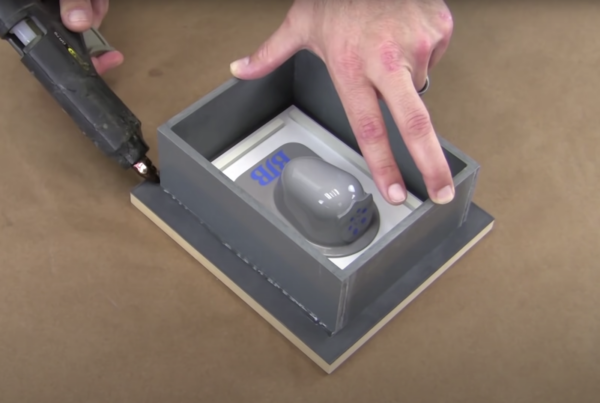
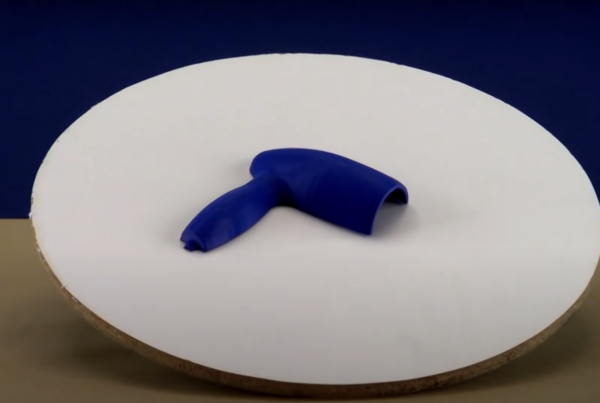
The pattern you wish to take a mold of should be properly prepared for molding. This means you should check the surface is smooth, clean, and sealed with the desired finish you need on the cast parts. You will find the level of detail silicone will capture and reproduce from the master is superb. Details like fine scratches, rough spots, or oily fingerprints can and will be reproduced by the silicone. If you’re looking for a high gloss finish casting without the need for clearcoats or buffing, then your pattern should reflect that before molding. Do you want matte finish parts or select areas to have a matte finish? Apply that on the pattern and the silicone will capture and reproduce it in the cast urethane parts. Need a texture for grips? That’s no problem for silicone. Note: Some 3D printed materials (typically UV cured SLA resins or Polyjet technology) need to be sealed with primer, paint, or a clear coat to prevent platinum silicone inhibition.
BJB offers several products that are platinum safe and can be used to seal your patterns and our Tech Staff can help you choose the right one. When in doubt, a small test on a questionable surface could save you a lot of time and money to be sure you are using compatible materials.
2. Not Mixing the Correct Ratio
Castable Silicone typically comes in two different mix ratios, 100/10 or 100/100. Altering these ratios by adding more of one side vs the other can result in softer, weaker, and easier to tear silicone. Using an accurate scale to measure by weight is the best and most accurate way to ensure your silicone will perform as advertised. Don’t “eyeball it” and risk your project, time, and monetary investment.
3. Failing to Properly Mix the Materials
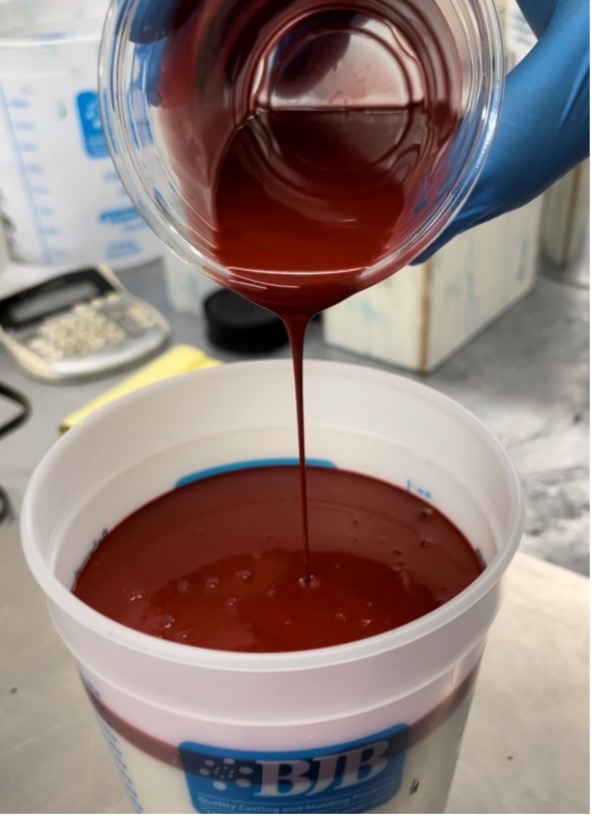
Mixing 2-component silicones is one of the most critical steps in creating molds and parts. Many systems are formulated with a pigmented/colored “B” side that gives a visual cue to help mixing. You are looking for a uniform color. If you see streaks or a “marbled” look to the silicone, it’s not thoroughly mixed yet. You need to make sure the bottom and sides of the mixing container are thoroughly scraped to avoid unmixed components ending up in your mold. This can cause soft or sticky spots in the cured silicone and could ruin your hard work. If the silicone is clear or unpigmented, then you need to ensure your mixing technique is sufficient and you are mixing for a long enough period of time. This brings up one very last important point. The mixing utensil you choose can have a big effect on the quality of mix you achieve. Don’t use dowels, screwdrivers, spoons, or other random objects to mix. You want a wide, flat mixing stick or spatula that can effectively scrape the sides and bottom of the mixing container while producing a good “shearing” action while it moves through the silicone. The mixing container should be smooth sided and have minimal ridges or bumps inside, or unmixed material will get stuck in those areas and potentially end up in the cast mold.