Polyurethane

3 Benefits of Polyurethane Caster Wheels

Home  |  How-to articles  |  Polyurethane

Why You Should Use Polyurethane Caster Wheels

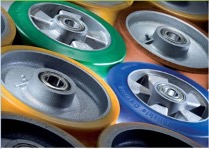
When it comes to caster wheels for heavy-duty industrial applications, there are two primary materials to choose from: rubber and polyurethane. While other materials can be used for the tires, these are the two most popular options for the wheel tread. If you’re trying to decide between the two, here are a few reasons to opt for polyurethane.

1. Less Noise

Outfitting machinery with polyurethane caster wheels ensures fairly quiet operation. Polyurethane is an effective shock absorber because of its cushioning capabilities and makes for much quieter wheels than steel or cast iron. If noise levels are a concern at your facility, using polyurethane casters will make it much easier to meet OSHA’s requirements for protecting hearing.
2. More Load-Bearing Capacity

Polyurethane caster wheels can carry much heavier loads than rubber. Because of their hardness, they’re also more resistant to cracking, flaking, splitting, and tearing. In other words, they can work much harder and last for much longer than their rubber counterparts. While longevity may not be a concern for short-term projects, it’s worth considering when outfitting equipment that you’ll need for years.

3. Better Floors

If the condition of your facility’s flooring is a concern—perhaps you direct clients through the area, for example, and want to leave a good impression—polyurethane wheels are the optimal choice. Because of their larger size, they distribute weight more evenly than rubber and nylon casters. This prevents dents, scratches, chips, and cracks as they roll across the flooring with especially heavy loads.

For quality results, turn to BJB Enterprises, Inc. for polyurethane casting supplies. Since 1970, BJB Enterprises in Tustin, CA, has provided high-quality polyurethane products and materials to a variety of manufacturers across the world. Combining unmatched technical expertise and knowledge of materials, BJB helps customers find real-world solutions for their applications.

Related how-to articles
Polyurethane
January 16, 2023

What is Viscosity?

We use a piece of equipment called a Viscometer to measure the…
Polyurethane
January 16, 2023

What Is the Shore Hardness Scale?

The shore hardness tests are performed by creating an indentation on the…
Related video learning
Polyurethanes
February 9, 2023

Stop Flex Urethane Color Change | ColorFlex EZ to Pigment and Color Stable

Are your flex urethane parts color shifting rapidly in the sun? Did…
Polyurethanes
January 13, 2023

Casting a Part With Polyurethane | Part 2

Welcome to Part 2 of BJB's Mold and Part Making Video Series!…
Polyurethanes
January 13, 2023

How to Care and Store Casting Urethane Materials

BJB Introduces its latest line of high performance flexible polyurethane elastomers. The…