
Polyurethane

Polyurethane Plastic and Rubbers Explained

Home  |  How-to articles  |  Polyurethanes

Polyurethane Plastic and Rubbers Explained

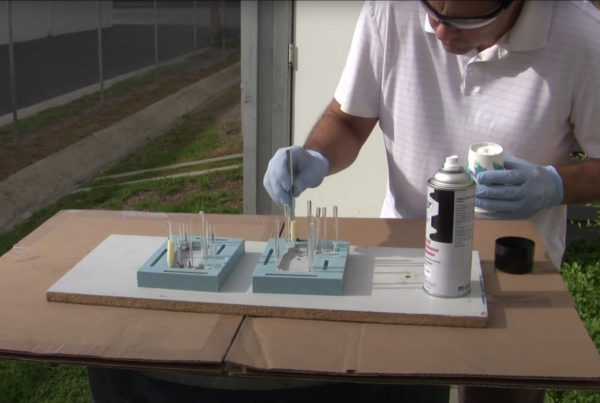
Making silicone molds and casting polyurethane parts is a great way to make small quantities of plastic parts in a very short period of time. A silicone mold can be made in a day or two once your original pattern has been made. Your pattern can be an existing part, or something fabricated by hand or machine. These days most patterns are 3D printed and there are several 3D printing technologies to choose from with pros and cons to each.

Depending on the polyurethane casting material selected, you can pull parts out of your mold every as quickly as 10 minutes, and some systems may require an overnight cure. Much of this depends on the geometry of the part you are making or the type of material needed to create the part. This process is used in most manufacturing industries. It’s a very cost-effective way to get product feedback, prove out your design, and make design changes before expensive production tooling is made.

The cast polyurethanes BJB sells are two component systems (A & B) typically mixed and poured into a one- or two-piece silicone mold. These materials are “Thermoset Plastics” as opposed to “Thermoplastics” typically used for high volume production, utilizing injection molds. Thermoset products cure and “set” once the chemical reaction has taken place. Thermoplastics are melted down from pellets and injected into molds at high pressure and cool to solidify. There are a lot of differences between the two material categories that would be too much for this article, but in this application and industry, we try to substitute and mimic injection molded plastic and rubber parts with Thermosetting materials to achieve functional parts and prototypes in a faster and less expensive development process.

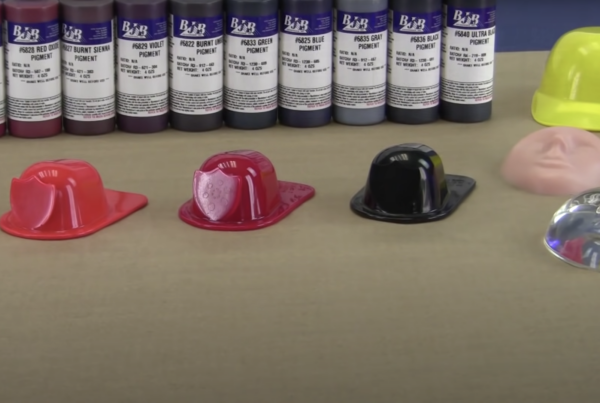
BJB sells a wide range of Thermosetting polyurethanes from flexible (Shore A) to rigid (Shore D) and everything in between. We supply Technical Data Sheets (TDS) for all our products, which include the materials mechanical and handling properties. This way, you can select the correct product for your particular application. Most of BJB’s materials are offered in their natural colors which can range depending on the formulation. Some are white, translucent, gray, clear amber, and clear. Most of these products can be pigmented using our 6800 series pigments (Opaque) or dyed using our 7100 dyes (Translucent). We recommend that you stay under 2 percent dye or pigment to the total weight of the A and B components. The more Dye or pigment you use, the more likely you will adversely affect the materials mechanical properties. Keep in mind, the natural base-color of the casting material will affect how well you will be able to achieve the final color you are after. A strong white base will tend to shift colors lighter, and an amber base color material would be very difficult to achieve a bright white finished color. We also sell pre-pigmented black versions of some of our products; a minimum purchase might be required. We are always happy to provide cured samples of our casting materials for client evaluation and help with selection.

The Product Material Charts found on our website make it easy and quick to compare our product options to one another and this makes the selection process much easier.

For quality results, turn to BJB Enterprises, Inc. for polyurethane casting supplies. Since 1970, BJB Enterprises in Tustin, CA, has provided high-quality polyurethane products and materials to a variety of manufacturers across the world. Combining unmatched technical expertise and knowledge of materials, BJB helps customers find real-world solutions for their applications.

Related how-to articles
Polyurethane
January 16, 2023

What is Viscosity?

We use a piece of equipment called a Viscometer to measure the…
Polyurethane
January 16, 2023

What Is the Shore Hardness Scale?

The shore hardness tests are performed by creating an indentation on the…
Related video learning
Polyurethanes
January 13, 2023

Casting a Part With Polyurethane | Part 2

Welcome to Part 2 of BJB's Mold and Part Making Video Series!…
Polyurethanes
January 13, 2023

How to Care and Store Casting Urethane Materials

BJB Introduces its latest line of high performance flexible polyurethane elastomers. The…
Polyurethanes
January 13, 2023

Pro Series Silicone Mold Tutorial | Electric Skateboard Controller

Watch how to turn high quality SLA 3D Prints into Patterns for…

Leave a Reply